
In-Depth Comparison of D-Link DWP-1010 and YHioT RW5000: Application Differentiation Driven by Chip Differences and Outdoor Coverage Performance
In the field of 5G outdoor Customer Premise Equipment (CPE), the D-Link DWP-1010 and YHioT RW5000 stand out as two representative products. However, due to significant differences in core chip selection, they exhibit distinct characteristics in terms of functionality, environmental adaptability, and most importantly, application scenarios. Additionally, their performance in outdoor coverage, a critical factor for outdoor CPE, also varies substantially. This article conducts an in-depth comparison of the two devices, focusing on how chip differences drive application differentiation and analyzing their respective strengths and weaknesses in outdoor coverage.
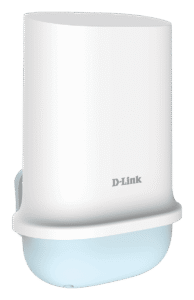
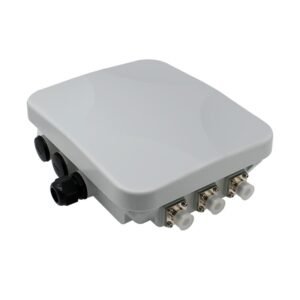
1. Core Chip Differences: The Fundamental Driver of Product Differentiation
The choice of core chip directly determines the performance baseline, functional expansion capabilities, and environmental resilience of outdoor CPE. The DWP-1010 and RW5000 adopt completely different chip solutions, laying the foundation for their divergent positioning. The table below summarizes their core chip-related parameters:
Parameter | D-Link DWP-1010 | YHioT RW5000 |
Core Chip Solution | Qualcomm chip (model undisclosed) | Quectel 5G industrial-grade modem |
Chip Positioning | Consumer-grade (optimized for high-speed transmission) | Industrial-grade (focused on stability & resilience) |
5G Mode Support | Only 5G NSA (Non-Standalone) | 5G SA (Standalone) + 5G NSA |
5G Speed (Downlink/Uplink) | 3.4 Gbps / 620 Mbps | 2.4 Gbps (SA) / 3.4 Gbps (NSA) / 900 Mbps (SA) / 500 Mbps (NSA) |
LTE Speed (Downlink/Uplink) | 2 Gbps / 150 Mbps | 1.6 Gbps / 200 Mbps |
Operating Temperature Range | Estimated -10°C ~ 55°C (consumer-grade standard) | -40°C ~ 75°C (industrial wide-temperature design) |
Special Industrial Protection | None (no anti-surge/anti-interference design) | Anti-surge (EN 61000-4-5), anti-electromagnetic interference |
Global Multi-band Compatibility | Limited (mainstream consumer bands only) | Wide (supports n1/n3/n7/n78, 适配 global operators) |
1.1 D-Link DWP-1010: Qualcomm Chip for Consumer-Grade High-Speed Connectivity
The DWP-1010 is equipped with a Qualcomm chip (specific model not officially disclosed). Qualcomm chips are widely recognized in the consumer electronics sector for their advantages in high-speed data transmission and compatibility with mainstream network standards. This chip selection enables the DWP-1010 to deliver impressive speed performance (as shown in the table above). However, the Qualcomm chip in the DWP-1010 is optimized for consumer-grade scenarios, with limited enhancements for harsh industrial environments. For example, it lacks specialized designs for wide-temperature operation or electromagnetic interference resistance, which restricts its application in complex industrial settings.
1.2 YHioT RW5000: Quectel 5G Modem for Industrial-Grade Reliability
In contrast, the RW5000 adopts a Quectel 5G industrial-grade modem (a key feature highlighted on YHioT’s official website). Quectel’s industrial modems are engineered to withstand extreme conditions, with a focus on long-term stability, wide environmental adaptability, and industrial security protocols. As reflected in the table, this chip solution endows the RW5000 with unique industrial advantages, such as dual-mode 5G support, wide-temperature resilience, and industrial-grade protection—all critical for operations in harsh environments like factories, oil fields, or remote outdoor locations.
2. Application Scenario Differentiation: Driven by Chip-Centric Design
The core chip differences between the two devices translate into clear boundaries in their application scenarios. The table below compares their scenario based on key requirements like environmental conditions, connectivity demands, and management needs:
Scenario Requirement | D-Link DWP-1010 (Consumer/SMB Focus) | YHioT RW5000 (Industrial Focus) |
Target User Group | Rural households, small businesses, event organizers | Factories, smart grid operators, municipal authorities |
Key Environmental Need | Basic outdoor protection (rain/dust) | Extreme condition resistance (high/low temp, oil/dust, surges) |
Bandwidth Requirement | High (for 4K streaming, cloud gaming) | Balanced (prioritizes stability over peak speed) |
Device Connectivity Scale | Small (10-20 devices max) | Large (up to 100 WiFi devices + industrial sensors) |
Management Mode | Single-device Web UI (no batch management) | Cloud platform (batch firmware updates, real-time monitoring) |
Security Requirement | Basic (SIM unlock only) | Advanced (IPsec/WireGuard VPN, DDoS protection) |
Unattended Operation Support | No (no watchdog/dual-link backup) | Yes (hardware+software watchdog, wired+5G backup) |
2.1 D-Link DWP-1010: Optimized for Consumer and Small-Business Outdoor Scenarios
Leveraging the high-speed performance of the Qualcomm chip and a lightweight design, the DWP-1010 excels in scenarios where high bandwidth and easy deployment are prioritized (as shown in the table). Key use cases include:
- Rural Broadband Expansion: In rural or mountainous areas where fiber-optic networks are unavailable, the DWP-1010 acts as a “5G-to-wired” bridge. Its 2.5 Gbps Ethernet LAN port (supporting PoE power supply) can connect to home routers, providing high-speed 5G connectivity for multiple devices, meeting demands for 4K video streaming, cloud gaming, and simultaneous multi-device downloads.
- Temporary Event Connectivity: For outdoor exhibitions, sports events, or campsites, the DWP-1010 supports plug-and-play deployment. With the help of mobile apps like EZ Site-Survey, users can quickly locate optimal signal positions (e.g., mounting on lamp posts or walls) to set up a high-speed 5G network in a short time. It also supports 5G/LTE dual-mode fallback, ensuring uninterrupted connectivity even in areas with weak 5G signals.
- Small-Business Outdoor Office Extension: For outdoor office areas in industrial parks or warehouses (e.g., logistics sorting stations), the DWP-1010 can be deployed in high outdoor locations to receive stable 5G signals, then connect to office devices (e.g., computers, printers) via wired connections. Its IP67 dustproof and waterproof rating meets basic outdoor environmental requirements, eliminating the need for professional maintenance teams.
2.2 YHioT RW5000: Specialized for Industrial-Grade Scenarios
The Quectel 5G modem’s industrial attributes, combined with robust hardware design, make the RW5000 the preferred choice for IIoT and complex outdoor industrial environments (as outlined in the table). Key use cases include:
- Smart Factories and Industrial Automation: Industrial workshops often face high temperatures (from equipment heat dissipation), electromagnetic interference (from motors and machine tools), and oil/dust contamination. The RW5000’s wide-temperature design (-40°C to 75°C) and metal casing can withstand these harsh conditions. Its low-latency 5G connectivity (latency <20ms in SA mode) enables real-time transmission of instructions and status data for industrial robots and PLC controllers, ensuring continuous production. Additionally, IPsec/VPN tunnel encryption prevents production data leakage, complying with industrial information security standards.
- Outdoor Unattended Device Networking: In scenarios such as smart grid (power distribution terminal monitoring), oil pipeline monitoring, and forest fire prevention, the RW5000 offers distinct advantages. It optionally supports a built-in GPS module (compatible with the NEMA-0183 positioning protocol) for real-time device location tracking, preventing loss of outdoor equipment. Its “wired + 5G” dual-link backup ensures automatic switching in case of network outages, avoiding interruptions in monitoring data. Surge protection and wide-temperature design also reduce maintenance costs by withstanding outdoor risks like lightning strikes and extreme temperatures.
- Large-Scale Public Area High-Density Connectivity: Scenic spots, squares, and transportation hubs require support for a large number of concurrent users. The RW5000 supports the IEEE 802.11ax WiFi 6 standard, capable of connecting up to 100 devices simultaneously. It also supports QoS (Quality of Service) traffic prioritization, ensuring smooth operation of high-bandwidth services like video calls and live streaming. Furthermore, its cloud platform management function enables batch configuration of multiple devices (e.g., simultaneous firmware updates and WiFi parameter adjustments), making it suitable for large-scale deployments by operators or municipal authorities.
3. Outdoor Coverage Performance: A Critical Comparison for Outdoor CPE
Outdoor coverage range and signal stability are core performance indicators for outdoor CPE. The DWP-1010 and RW5000 differ significantly in this aspect, primarily due to differences in antenna design, transmission power, and band support. The table below compares their key coverage-related features:
Coverage-Related Feature | D-Link DWP-1010 | YHioT RW5000 |
Antenna Type | 6 internal 5G/LTE antennas (fixed, non-expandable) | 4 N-type 5G antenna ports + 2 N-type WiFi ports (external, expandable) |
Antenna Gain | Estimated 5-7 dBi (internal antenna limitation) | Up to 12 dBi (with optional high-gain external antennas) |
Signal Coverage Adjustability | Fixed (depends on deployment location only) | Flexible (adjustable via external antenna direction/type) |
Band Support for Coverage | Limited (focuses on high-speed bands, weak on low-frequency bands) | Comprehensive (includes low-frequency bands for long-distance coverage) |
Signal Penetration (Obstacles) | Weak (struggles with buildings/trees) | Stronger (external antennas + multi-band support improve penetration) |
Typical Coverage Radius (Open Area) | 100-200 meters | 300-500 meters (with high-gain antennas) |
3.1 Antenna Design: Fixed Internal vs. Expandable External
Antenna design directly affects signal gain and coverage angle, which are key factors in determining outdoor coverage.
- D-Link DWP-1010: Equipped with 6 internal 5G/LTE antennas. As shown in the table, internal antennas have inherent limitations—their gain (estimated 5-7 dBi) is lower than external alternatives, and they cannot be adjusted or replaced. This means the DWP-1010’s coverage is highly dependent on its deployment location (e.g., mounting height, surrounding obstacles). In open rural areas with few obstacles, it may achieve a coverage radius of 100-200 meters, but in areas with buildings or dense trees, signal penetration and range will be significantly reduced. Additionally, the lack of external antenna ports means users cannot upgrade to high-gain antennas to extend coverage.
- YHioT RW5000: Features 4 N-type 5G antenna ports and 2 N-type WiFi antenna ports (all external). This design allows users to choose high-gain antennas (up to 12 dBi) based on specific needs, greatly improving signal gain and coverage range. As noted in the table, in open areas with high-gain antennas, the RW5000 can achieve a coverage radius of 300-500 meters—nearly double that of the DWP-1010. Furthermore, external antennas can be directed toward signal towers to avoid obstacles, enhancing signal stability in complex environments (e.g., urban areas with tall buildings or industrial zones with heavy machinery).
3.2 Band Support and Signal Penetration
Band support is another critical factor influencing outdoor coverage. Low-frequency bands (e.g., 700 MHz, n28) have longer wavelengths and stronger penetration, making them ideal for long-distance coverage and obstacle penetration. High-frequency bands (e.g., 3.5 GHz, n78) offer higher speeds but weaker penetration.
- D-Link DWP-1010: Focuses on high-frequency bands to prioritize speed performance (consistent with its consumer-grade positioning). While this enables high-speed data transmission, it limits coverage range and penetration. In areas with obstacles (e.g., walls, trees), the signal is easily blocked, resulting in reduced coverage and unstable connections.
- YHioT RW5000: Supports a wide range of bands, including low-frequency bands for long-distance coverage and high-frequency bands for speed. This multi-band support allows the RW5000 to adapt to different scenarios: in remote areas (e.g., oil fields, mountainous monitoring stations), it can use low-frequency bands to extend coverage; in dense industrial zones, it can switch to high-frequency bands for high-speed data transmission. Additionally, the Quectel modem’s advanced signal processing algorithms further enhance signal penetration, ensuring stable connectivity even in environments with heavy electromagnetic interference.
3.3 Practical Application Implications of Coverage Differences
The coverage performance differences between the two devices directly impact their suitability for specific scenarios:
- For rural households or small businessesneeding basic outdoor coverage (e.g., a single farm or small workshop), the DWP-1010’s 100-200 meter range may be sufficient, especially if cost and easy deployment are prioritized.
- For industrial users or large-scale public projects(e.g., smart grids, scenic area WiFi coverage), the RW5000’s extended coverage (300-500 meters) and flexible antenna design are essential. For example, a single RW5000 with high-gain antennas can cover an entire factory campus or a large scenic spot, reducing the number of devices needed and lowering deployment costs. In unattended scenarios (e.g., pipeline monitoring), the RW5000’s strong signal penetration ensures it can maintain connectivity even in remote areas with few signal towers.
4. Conclusion: Choosing the Right Device Based on Scenario Needs
The D-Link DWP-1010 and YHioT RW5000 represent two distinct positioning in the 5G outdoor CPE market, with their differences rooted in core chip selection:
- The DWP-1010(Qualcomm chip) is a consumer-grade device optimized for high speed and easy deployment, suitable for rural broadband expansion, temporary events, and small-business outdoor offices. Its coverage is limited but sufficient for small-scale, low-complexity scenarios.
- The RW5000(Quectel 5G industrial modem) is an industrial-grade device focused on stability, resilience, and flexible coverage, ideal for smart factories, unattended monitoring, and large-scale public area connectivity. Its expandable antennas, multi-band support, and wide-temperature design make it capable of operating in harsh and complex environments.
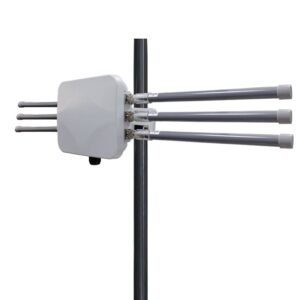
RW5000 Outdoor 5G CPE Router